The challenge in bending surface-sensitive parts lies in ensuring both accurate angles and dimensions while meeting surface quality requirements. Many surface issues are typically caused by a combination of factors, including an excessively small V-die opening, poor condition of the die shoulder, contaminated tooling surfaces, an overly small punch nose radius, and improper handling during flipping and transport. This article will explain the primary causes of surface quality issues and the corresponding countermeasures.
Why are surface-sensitive parts more challenging to produce consistently than standard structural parts?
Acceptance criteria for surface-sensitive parts go beyond angles and dimensions
For surface-sensitive parts such as brushed stainless steel, mirror-finished panels, film-coated panels, and decorative panels, even the slightest friction mark can compromise the overall surface finish and is considered an unacceptable defect. Therefore, when evaluating the acceptance of surface-sensitive parts, one must not only focus on angles and dimensions but also consider surface quality.
Why rework costs are particularly high
Many surface-sensitive parts undergo costly surface treatments in the early stages. Once surface damage occurs, it is nearly impossible to repair, leaving no option but to scrap the part or downgrade its classification. This is typically the reason why rework costs for surface-sensitive parts are particularly high.
What causes the most common indentations, scratches, and protective film damage?
Too small a V-die opening and excessive pressure on the die shoulder
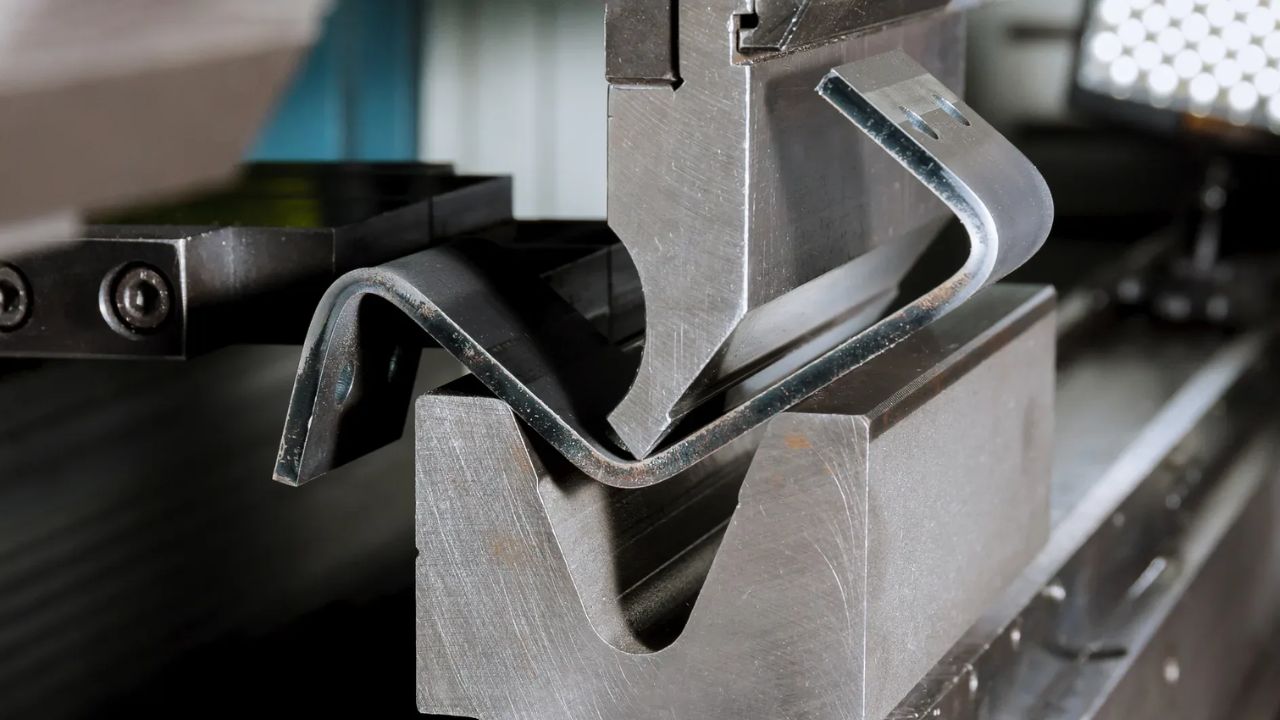
This is the most common cause of indentations on the workpiece surface. The smaller the selected V-die opening, the greater the bending force required, and the greater the friction between the workpiece and the die shoulder, resulting in two distinct indentations on the workpiece surface.
Punch nose radius and lower die condition
Punch nose radius: If the punch nose radius is too small, the localized stress on the material at the bend line tends to be more concentrated, thereby increasing the risk of creasing, whitening, film damage, or even microcracks on the workpieces.
The lower die condition: Material buildup on the die shoulder can easily scratch the workpieces;
Secondary scratches caused by handling, turning, and contact with the workbench
Contamination: A dirty tooling surface can also cause scratches on the workpiece surface;
Turning friction: Incorrect handling by workers when turning the workpiece can cause friction with the workbench or tooling.
Why do material differences affect the bending window?
Differences in surface properties and springback between stainless steel, aluminum sheets, and ordinary mild steel
Different materials have varying hardness and springback characteristics. For example: Stainless steel is hard and exhibits significant springback, requiring higher pressure, which makes it more prone to indentations; aluminum sheets are softer and have lower scratch resistance, making them more susceptible to scratches and indentations; Ordinary mild steel exhibits springback that falls between the two, and in many structural component applications, it typically has a higher tolerance for surface marks than mirror-finished stainless steel, decorative aluminum sheets, or film-coated parts.
Why do we need to consider film orientation and protection strategies for film-coated parts?
Even if the material itself has a protective film, this does not mean there are no surface risks; if the edge pressure is too high, the film may still be punctured. Therefore, for film-coated parts, we must also consider the orientation of the protective film and additional protection strategies. For example:
Whether the side with the film is on the inside or outside during bending, whether it contacts the upper punch or the lower die, whether it will scrape against other objects during flipping, how much edge pressure the film can withstand, and whether the protective film can tolerate whitening, wrinkling, tearing, or adhesive residue.
To minimize surface damage to film-coated parts, the following methods can be employed:
While ensuring compliance with the part’s inside radius, minimum flange length, and angular accuracy requirements, one can select a larger upper punch radius, a wider V-die opening, place a protective layer on the lower die surface, or use non-marking tooling. These methods typically help reduce the risk of surface indentations and scratches on film-coated parts.
On-site, which methods are most effective in reducing surface damage risks
Non-marking dies, polyurethane inserts, protective layers, and proper flipping and placement
Tooling contact methods: Protective measures such as using non-marking lower die, V-die equipped with polyurethane inserts, and placing protective pads on the lower die surface can effectively reduce friction between the workpieces and the lower die.
Operating procedures: Proper flipping and positioning of the workpieces can also effectively prevent friction between the workpieces and the worktable or tooling.
Speed, sample validation, and first-piece standards
When bending surface-sensitive parts, speed must be carefully controlled. Excessive speed may increase impact and slippage between the workpieces and the tooling, and may also lead to increased contact between panels or between panels and equipment during flipping and removal, thereby increasing the likelihood of surface damage. Additionally, specific acceptable marks must be clearly defined during the first-piece approval stage, as each additional first-piece trial bend increases the probability of surface damage.
When the problem can no longer be solved by simply “being more careful”
The importance of machine stability, angle correction, and sheet follower systems
If a machine’s repeatability, support capacity, clamping stability, and compensation capabilities are inherently insufficient, these issues will become apparent much sooner when bending surface-sensitive parts. When comparing equipment options in the early stages, buyers typically start by browsing public pages like RAYMAX press brake solutions to understand the machine’s tonnage, length, and configuration range. However, for surface-sensitive parts, the true determinants of the outcome are the machine’s repeatability, clamping consistency, compensation stability, and sheet follower capability. These factors ensure smoother bending of surface-sensitive parts and help reduce the number of trial bends, thereby lowering the risk of indentations, scratches, and secondary damage.
Why surface quality standards must be specified in advance when outsourcing prototyping
An outsourced manufacturer’s default definition of “acceptable” may only cover angle and dimensional accuracy, without considering your surface requirements. Therefore, when sending drawings to an outsourced manufacturer, you must clearly specify the orientation of the visible surfaces and the acceptable level of indentation to avoid disputes later on.
Surface part inspection checklist for outsourcing, prototyping, and mass production transition
Before placing an order, be sure to confirm the following 8 key points:
Surface grade
Specify whether the part is a mirror-finished part, a brushed part, a pre-coated sheet, or a visible surface for home appliances, and indicate that surface quality must be strictly controlled in accordance with standards for visible components.
Permissible indentation range
Specify whether zero indentations are required or if minor contact marks are permitted; if minor contact marks are permitted, clearly state that they are limited to the inner, non-visible surfaces.
Protective film condition
Specify whether the workpiece surface has a protective film, which side has the film, whether the film must remain intact after bending, and whether localized whitening or damage to the film is acceptable.
Visible surface orientation
Indicate which side is the visible surface, which side contacts the tooling, and whether there are any requirements regarding the direction of the brushed finish.
Material batch
Clearly state the material type, grade, thickness, and surface condition; use materials of the same grade for both prototyping and mass production whenever possible.
Tooling design
Specify whether non-marking lower die, protective pads, or soft inserts must be used; if necessary, indicate the V-die opening range.
Sample approval method
The first-piece approval must include confirmation of angles and dimensions, as well as inspection of the surface condition; take photos and retain samples if necessary.
Transportation and storage requirements
Indicate whether parts need to be separated from one another, whether visible surfaces can come into direct contact, and whether packaging and transportation must be handled in accordance with surface finish requirements.